
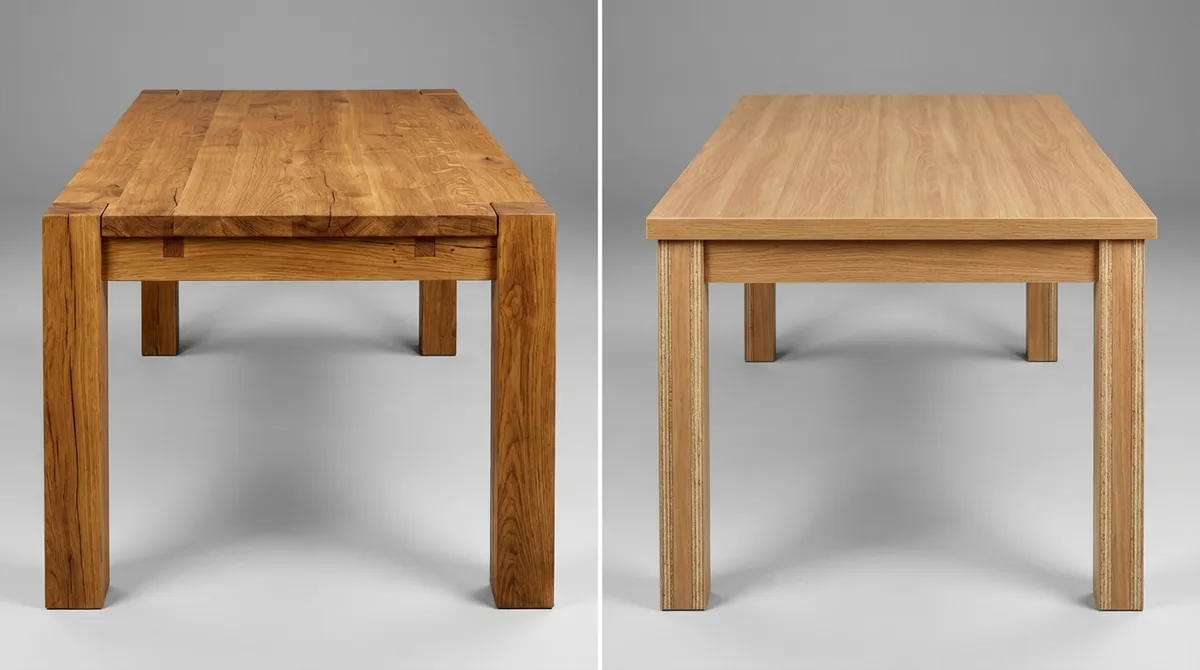
Solid Wood vs Engineered Wood Furniture — 2026 Complete Guide

Compare solid wood vs engineered wood (MDF, particle board) furniture. Pros, cons, durability, pricing, and identification tips.

🪵CategoryFurniture Materials
📊TypeComparison Guide

Solid Wood vs Engineered Wood — Which Is Better?

Solid wood or engineered? FurniGuide compares everything you need to know.

Wood Types

Solid Wood

Cut directly from trees: Oak, Walnut, Teak, Rubberwood.

Engineered Wood

  • MDF — fine, smooth, paintable
  • Particle Board — cheapest, not water-resistant
  • Plywood — strongest engineered option
  • Solid Wood Pros

  • Extremely durable — lasts decades
  • Natural beauty — unique grain
  • Repairable — sand & refinish
  • Ages beautifully
  • Solid Wood Cons

  • Expensive — 2-5x more
  • Heavy — hard to move
  • Requires maintenance
  • Engineered Wood Pros

  • Affordable — saves 50-70%
  • Lightweight — easy to move
  • Uniform surface — easy to finish
  • Won't warp
  • Engineered Wood Cons

  • Less durable — 5-10 years
  • Hard to repair
  • How to Identify Real Wood

  • Edges — continuous grain vs visible layers
  • Weight — solid wood is heavier
  • Knock test — dense vs hollow sound
  • Verdict

  • Solid wood for core pieces (dining table, desk, bed)
  • Engineered for shelving, accent pieces, budget items
  • 🛒

    Interested in products from this article?

    Check the latest prices and special promotions

    ❓ Frequently Asked Questions

    How much more expensive is solid wood?
    Solid wood costs 2-5x more. Oak and walnut are most expensive; rubberwood is more affordable.
    How to tell if furniture is real wood?
    Check edges for continuous grain, feel the weight (heavier), and knock (dense sound vs hollow).